The light had traveled 13.4 billion years. Photons flung out by the first stars when they were born—a memory of the universe when it was still young and hot. That memory became data packets and streamed in along the deep-space network. 400 petabytes per second. The signal slammed into distributed servers, shattered into fragments, then reassembled as an encrypted stream bound for a single destination: the central archive of the Stellarium Consortium. There the light was fitted with a price tag and turned into merchandise.
And 0.01% of it was leaking off down a side road.
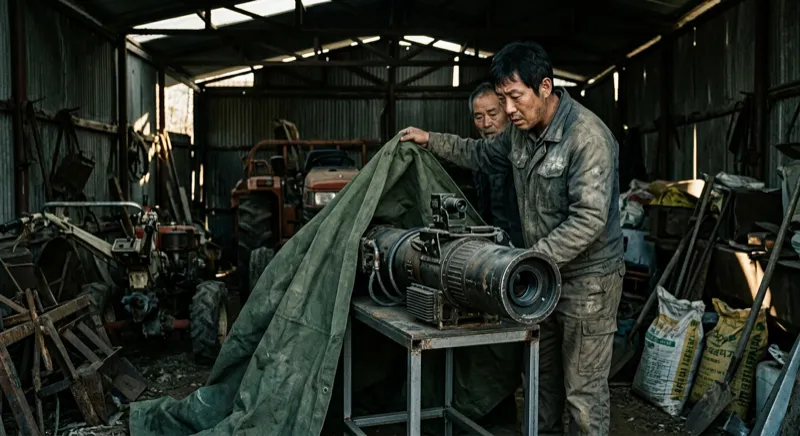
In the middle of a room where cables tangled like snakes, a man sat peering at a screen. The heat was stifling. Cooling fans roared as they spun, but they couldn't carry off all the heat pouring out of the server racks. On the screen was an intricate data-flow diagram. In real time it traced the path of a signal that had passed through dozens of nodes, threading past the last firewall by a hair's breadth. Latency: 2.4 seconds. That was good enough. That was a success.
He reached for the keyboard and typed the final command. Glassbead channel—begin broadcast. A small window opened in one corner of the monitor. Inside it, a darkness unfurled. Not a pitch-black. Fine gas drifted like clouds, and among it faint points of light were being born. A landscape from 13.4 billion years ago. He held his breath a moment. No matter how many times he saw it, it never grew familiar.
Short messages began scrolling up the chat window.
- It's up!
- Is today the James Webb Deep Field? Thank you.
- I'm watching it with my kid. Thank you, Glassbead.
He closed the chat window. He wasn't doing this for gratitude. This was closer to atonement. He was the man who had designed Stellarium's archive security system. The locksmith who had put a padlock on the sky. Five years ago he had walked away with a fat bonus for that very achievement.
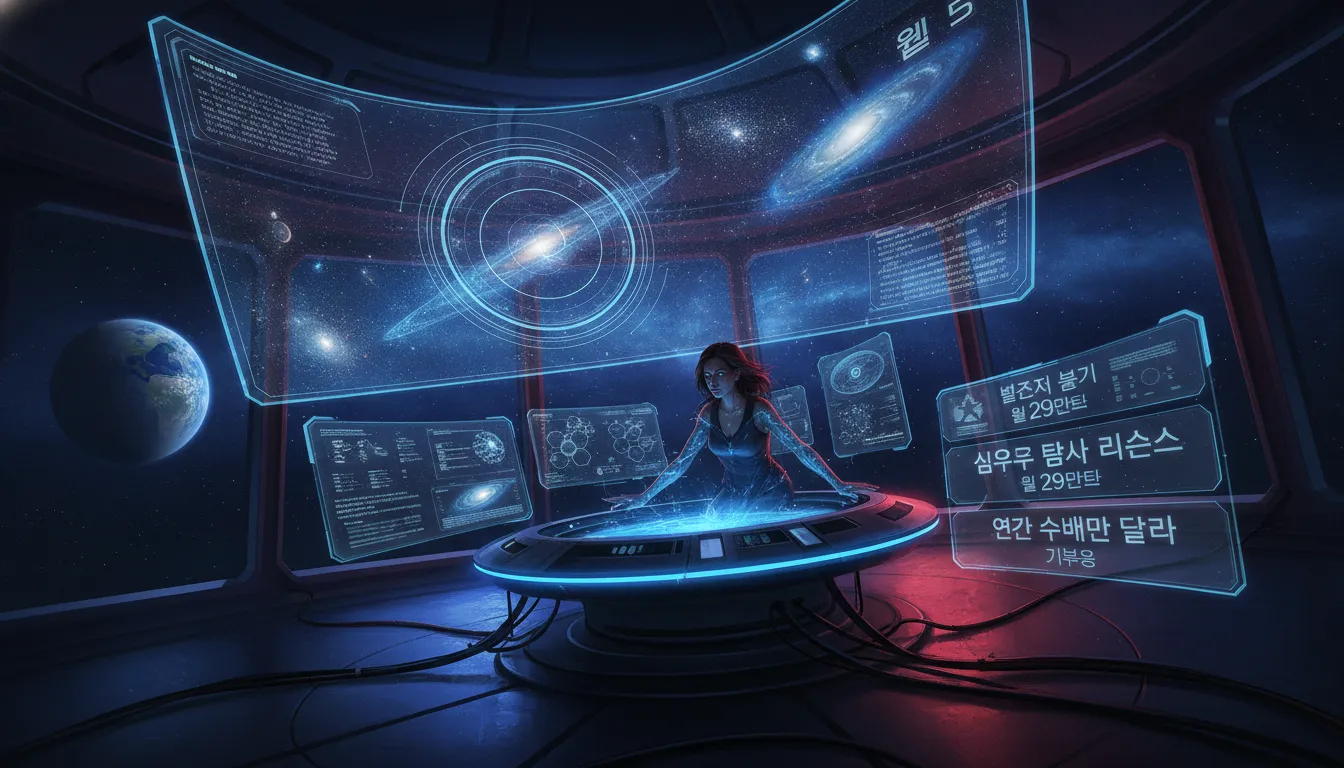
Stellarium held a monopoly on every scrap of data sent back by the Web 5 space telescope. The eye that saw farther and more sharply into the past than anything in human history. The scenes captured in that eye were released only to subscribers, tier by tier. From the $29-a-month "Constellation View" up to the "Deep-Space Exploration License" for corporations, priced in the millions per year. The sky came at a cost. To look upon the starlight of the dawn of time was the most expensive luxury there was.
The Glassbead he had built was a small hole punched in that wall of monopoly. A pirate broadcast that siphoned data off Stellarium's main stream and pushed it out over an anonymous channel. He knew the back doors and weak points of the system he'd designed better than anyone. He was fighting the monster he himself had made.
The alarm went off 17 minutes into the broadcast. A sharp beep sliced through the room. On the data-flow diagram, one of the relay nodes was blinking red. A detector.
"Already?"
He clicked his tongue. Stellarium's tracking team was good. He immediately rerouted the traffic to a backup path. His fingers flew across the keyboard. The red dot vanished and turned back to a steady green. But he knew: this was only the beginning. They would dig in more relentlessly now.
At the same moment, 800 kilometers above the ground: Stellarium's control center.
Soyeon was watching the map of Earth's data traffic floating on the enormous central screen. Across the surface of the blue marble, hundreds of millions of data flows were tangled like threads of light. This was the sky her team managed.
"Ma'am, three minutes ago we picked up another unauthorized data leak in the Northeast Asia sector."
one of the staff reported. There was tension in his voice. It was Glassbead's doing. The ghost that had been tormenting the control team for the past 6 months. Without rising from her seat, Soyeon jerked her chin toward the screen.
"What does the pattern analysis say?"
"Same as last time. Observation data toward the GN-z11 galaxy, leaked from deep-space stream 7. It got past the detector we installed in 17 minutes."
"17 minutes, huh."
Soyeon said quietly. Last time it had been 25. Her opponent was getting better and better. Or else it meant he was reading their moves before they made them.
"Bring the new tracking protocol online. Codename: Echo."
"But Echo is still in beta testing. It could put a strain on the whole sys—"
"Doesn't matter. To catch a rat you have to rattle the walls a little. Run it now."
Soyeon's voice was calm but unyielding. The staffer bowed his head and went back to his station. A moment later a faint ripple spread across the data map. Echo had gone live. It was no ordinary method of tracking. It laced a subtle distortion signal into the data stream itself, then back-traced the echo that came bouncing off the pirate servers. In theory it was flawless. But the one who had built that theory was a genius engineer who had left the company a few years earlier.
Jinwoo felt a chill run down his spine. The waveform showing the state of the data stream was quivering, ever so slightly. This wasn't ordinary noise. It was a distortion deliberately planted. He zoomed in on the waveform at once. A faint pulse signal, repeating in a specific frequency band. His heart dropped.
Echo.
It was the protocol he himself had designed just before he quit, 5 years ago. A project he'd only carried as far as a proof-of-concept model, its commercialization shelved. That Stellarium had pulled this out meant they were dead set on catching him. He was face to face with his own creation. He'd slipped in through the back door he'd hidden—only to find the hunting hound he'd designed lying in wait.
The heart of Echo was not mere tracking. Through the return signal it could pin down not only the physical location of a pirate server, but the type of hardware and even the kernel version of its operating system. Utterly stripped bare. Five more minutes of exposure like this, and everything he was would fall into Stellarium's hands.
Instead of cutting the transmission, he powered up a second console. His fingertips went cold. There was only one way. Exploit Echo's weakness. Echo was not flawless. It carried a fatal defect only he, its designer, knew about—its algorithm for analyzing return signals was vulnerable to a particular breed of 'false echo.' Slip hundreds of cunningly forged signals in among the real ones, and the tracking system would overload and seize up.
The trouble was that he had to code that 'false-echo generator' right now. Before his eyes, the schematic of Stellarium's tracking algorithm took shape. He'd seen it 5 years ago, yet it was as vivid as if he'd looked at it yesterday. He began to hammer at the keyboard. Code cascaded down the screen like a waterfall. It was everything he was. His past, his guilt, his craft. All of it churned together and converted, line by line, into commands.
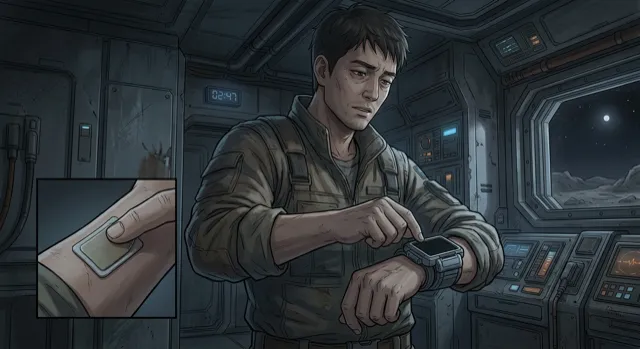
The room seemed to grow hotter still. The whir of the fans sounded like a scream. On the screen a timer counted down in red. 4 minutes, 12 seconds. His fingers began, little by little, to tremble. His fingers knew before he did that he was still here. He bit his dry lips. Starlight from 13.4 billion years ago watched him from the screen.
3 minutes, 58 seconds. Time was slipping through his fingers like grains of sand. A bead of sweat ran down Jinwoo's forehead and dropped onto the keyboard. He paid it no mind. His consciousness was wholly submerged in the world of the code. In his brain, millions of logic circuits fired and went dark in unison, over and over. 5 years ago, while designing Echo, he had planted a minute logical contradiction. Back then it had been nothing more than insurance against a what-if—or a developer's arrogant little joke. A seed of imperfection hidden inside the system's perfection. Now he had to make that seed sprout and seize the great monster by the ankle.
The key to the 'false echo' was not randomness. It was to imitate, with precision, the very patterns Echo's analysis algorithm expected—while generating, in bulk, signals that diverged ever so slightly at the decisive point. A fake more real than the real. The system would mistake these fake signals for meaningful data and begin its analysis. But as the data accumulated, the contradiction would amplify exponentially, until at last the computation cores fell into a logical deadlock they could not withstand. A primitive form of the blue screen. He was, right now, manufacturing a logic bomb to hurl into Stellarium's state-of-the-art tracking system.
1 minute, 30 seconds. The code was all but finished. There was no time even for a final round of debugging. He had to trust his memory and his fingers. Compile and execute in one stroke. The finger pressing the Enter key was heavy as lead. On the small auxiliary screen wired to his monitor, a graph of hundreds of fake data streams being spawned poured down like a waterfall. The generated 'false echo' packets wove themselves slyly into the flow of stolen light and began to surge backward, into the heart of Stellarium.
Now there was nothing more he could do. Success or failure. Either his position was exposed and everything ended, or he bought himself a little time. Heart pounding, he stared at the flow chart of the data. The red tracking path that had been reaching toward him suddenly began to split into branches. One became ten, and ten became a hundred. Like a red vein bursting across a vast map, hundreds of false paths flickered like something gone mad. And then, everything burned white. Overload. It had worked.
Jinwoo sank deep into the back of his chair. As the tension drained from his whole body, a crushing exhaustion rolled in. He closed his eyes for a moment. Behind his eyelids, the stars from 13.4 billion years ago shimmered. He had only wanted to show people that light. That was all.
***
The central screen of Stellarium's control center was engulfed in pure white noise. Alarms shrilled sharply from every direction. Every figure on the status board shattered into meaningless symbols. It was a system-wide chain failure triggered by the tracking protocol Echo.
"Team lead! The Echo system is out of control! The entire tracking server is down!"
"Switch to the backup system! Now!"
Despite Soyeon's shout, the chaos only mounted. Staff sprang from their seats, shouting and running about. It was like a bunker that had taken a direct hit. But Soyeon stood rooted to the spot, staring at the screen full of white noise. On her face, in place of bewilderment, a cold intelligence flashed. This was no simple system error. It was a perfectly calculated attack.
Echo was not a system that could be neutralized by an outside attack. It was impossible without knowing its internal structure exactly. Someone had made the system cage itself in its own logic and self-destruct. Soyeon bit her lip. A single face rose in her mind. The man who had designed Echo, warned of its dangers, and in the end scrapped the project altogether. Senior Researcher Kang Jinwoo.
"Everyone, quiet."
Her voice wasn't loud, but it was enough to cut through the clamor of the control center. Everyone turned to look at her. Without taking her eyes off the screen, she spoke.
"Restore every log from the Echo system. All the way back to the last uncorrupted moment. And pull up Echo's original design proposal. It'll be in the classified archive. Every file filed under the name of the researcher Kang Jinwoo."
One of the staff hesitated, then asked.
"Access to a former employee's files requires clearance…"
"It's on me. Now."
Soyeon was certain. Glassbead was no ghost. He was someone who had once stood at the very heart of the Stellarium. An architect who knew every secret passage of the castle he'd built. Soyeon felt a strange exhilaration and fury at once. This was no longer a fight against some nameless hacker. It was a confrontation with a senior colleague—perhaps with a mentor.
Just then, a call came through on her personal terminal. The caller was "Director Choi." Soyeon let out a short sigh and pressed the answer button. A sharp-featured middle-aged man appeared on the holographic display.
"Team Lead Han, care to explain what exactly is going on right now? The shareholders are burning up my phone."
"My apologies, Director. This is Glassbead's doing. There was a counterstrike against our tracking system."
"A counterstrike? Sounds to me like our system got breached by some hacker. And this 'Echo' you were so ambitious about—isn't it actually the culprit that paralyzed the entire system?"
Director Choi's voice was cold as ice. Soyeon answered without letting her emotions show.
"Thanks to it, we've seized a decisive lead on the adversary's identity. If you'll give me time…"
"Time? Team Lead Han, we don't have time. Our losses from the data leak run into hundreds of thousands of dollars an hour. This isn't a contest of technical pride. It's business. Corporate has made a decision. We're changing how we respond to Glassbead."
Director Choi went on. His eyes belonged to a man who saw nothing but the balance sheet—not the technology, not the data.
"From now on, your team will stop tracking Glassbead's location. Instead, you'll attack the stream he broadcasts itself. Not at the level of lacing the data with noise. You'll plant a lethal piece of malware in every node that receives the stream. You infect the devices of everyone watching his broadcast. You take the 'viewers' he treasures hostage. So that he shuts the broadcast down himself."
Soyeon's expression hardened. It was illegal. A plain criminal act, and an unethical method that shook the very foundations of the Stellarium.
"Director, that's…"
"This is an order, Team Lead Han. Not shaking the wall to catch a rat—it means burning the whole house down to catch it if you have to. Can't you do it?"
Soyeon couldn't answer. Her gaze went once more to the screen filled with white noise. Beyond that screen flickered the face of a man who understood the same code she did, who must have looked up at the same sky. She was standing now at a crossroads not of technology, but of conscience.
When Director Choi's hologram vanished, the noise of the control center flooded back into her ears as if by some cruel trick. But Soyeon heard none of it. Her eyes were fixed on a single point in the empty air. An order to plant a virus in the devices of people watching the stars with their children. That went beyond locking the sky—it was an attempt to blind the very eyes that looked up at it. It felt as though every conviction she had upheld as an engineer was crumbling beneath her feet.
She had thought herself different from Kang Jinwoo. When he chased his ideals and left the system, she had chosen to remain in reality and defend it. She'd believed that was the more responsible thing to do. But now the system was ordering her to become a monster.
"Team Lead, what should we do?"
One of the staff asked cautiously. The gazes of the team, demoralized by Echo's failure, were all fixed on her. In their eyes were disappointment, unease, and a faint trace of hope. Soyeon slowly turned to face them. Her voice was startlingly calm.
"We activate Plan B, per the Director's instructions. Prepare to insert the malware into the Glassbead stream. The target is the general public—anyone and everyone. The most universal code there is, indifferent to OS type or device specs."
Bewilderment flickered across the team's faces. A few exchanged wary glances and murmured among themselves. Soyeon ignored their reaction. She lifted her personal terminal and opened the anonymous channel with the highest security grade. There was only one recipient. An old ID, gathering dust from years of disuse. Her fingers began typing a message without hesitation.
'You listening, senior? I'm setting a trap. In 30 minutes.'
A single line of text surfaced on Jinwoo's monitor. It had flown in over a secure channel, sender unknown. 'You listening, senior? I'm setting a trap. In 30 minutes.'
His heart seemed to stop. Senior. There was only one person who would call him that. Soyeon. What kind of trap was she setting? Jinwoo grasped the situation at once. This wasn't a threat. It was a warning, and a last chance. Director Choi—or someone higher up—must have played a hand more extreme than he'd imagined, and Soyeon was at once the executor of that order and the one dreaming of mutiny. The trap wasn't aimed at him. It would be a device to overturn the entire board.
30 minutes. He flexed his fingers over the keyboard. There was time enough to kill the broadcast and run. But that would mean turning his back on Soyeon's signal. Instead of running, he began to write new code. Not a firewall to block the incoming assault. He was building a spear-thrower—one that would catch the hurtling spear gently, analyze the poison on its tip, and hurl it back at whoever had thrown it.
At that same moment, Soyeon was giving orders to her team, her face like ice.
"Ready the malware—'Hydra.' Infect every device routing through the Glassbead stream, no exceptions. Twenty minutes to launch."
Shock and confusion flickered across her team's faces, but no one dared to object. Soyeon forced herself to ignore their unease and reviewed the code. The 'Hydra' she'd chosen was something she had designed herself, riddled with a deliberate flaw. Combined with a specific data packet, its destructive functions would seize up and instead swing open a tiny back door—one that let the outside reach into the system's core. A cipher only Kang Jinwoo could read, a secret between him and her alone.
The agreed-upon 30 minutes passed. Jinwoo's timer hit zero. Almost simultaneously, a red contamination signal bloomed on his data flow chart. It was 'Hydra.' A poisoned arrow, fired from the heart of the Stellarium, came racing down the current of light toward his server. He held his breath and waited. His own code began to quarantine the malware and dissect it. A few seconds later, the result surfaced on his screen. The 'key' Soyeon had hidden revealed itself. Jinwoo smiled faintly.
He didn't hesitate. He turned the key and opened the door into the Stellarium's system. Then he sent the purest thing he had. The raw, unprocessed original data from 13.4 billion years ago, just received by Web 5. And one thing more. A log file containing the communication records of Director Choi issuing his illegal orders to Soyeon.
The enormous central screen of the Stellarium control center flickered. The 29-dollar-a-month constellations and the ads for multimillion-dollar annual license packages vanished in an instant. What filled their place was a breathtaking vista of the cosmos. Newborn stars blossoming like jewels in pitch-black space—the face of the very beginning. No watermark, no price tag. The deepest, oldest scene the human eye had ever reached spilled across every official Stellarium channel, across the billboards of its partner companies, even across the giant screens in the public squares.
"What is—what is this…!"
Director Choi's enraged voice tore through the speakers, but Soyeon did not so much as stir. She was gazing up at the screen. Her team, too, stood transfixed, staring at the sight. This was the true face of the sky they had tried to keep locked away. Quietly, Soyeon transmitted her resignation from her own terminal.
Jinwoo's cramped room. He knew, in his bones, that it was all over. Glassbead was no longer needed. The world itself had become one vast glass bead. He typed the final command into the keyboard. 'Close channel.'
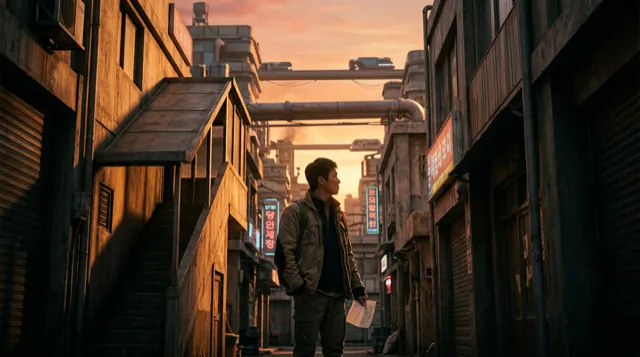
When he pressed Enter, the cosmos on the screen went dark. He threw the power switch on the server rack. The cooling fans that had been howling like something out of hell wound down, and at last silence settled over the room. He rose from his creaking chair and opened the door that had stayed firmly shut. Instead of stifling heat, cold, fresh dawn air brushed his cheek. He walked outside and lifted his head. A murky sky, not a single star visible through the city's light pollution. And yet he saw them. The priceless light that had crossed billions of years to reach his retina. Slowly, very deeply, he drew in a breath.